Andrew Dougherty explains what Iris aiOne adds for Iris M owners, how the upcoming 5.2 piping workflow supports investigations, and how to explore an upgrade.
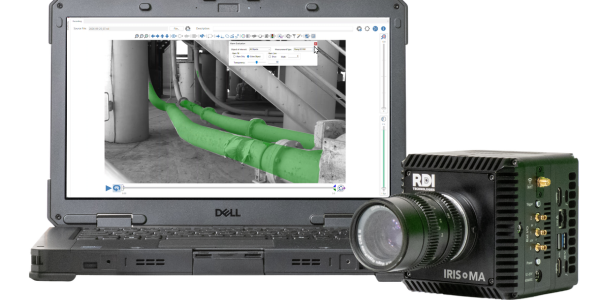
RDI Technologies’ Motion Amplification® 5.2 release is expected in early November 2026. It adds dedicated piping acquisition and piping alarm visualization to Iris aiOne™, along with shared measurement and analysis improvements for Iris M™ and Iris aiOne. For existing Iris M owners, the choice is whether the shared software improvements meet their needs or the additional aiOne capabilities support their next applications.
During my more than eight years at RDI, I have watched customers use video to explain vibration problems that were difficult to communicate with a plot or a number alone. In the early days, processing a recording could take hours, sometimes as long as eight. Today, Iris aiOne™ provides live visualization while you are at the asset.
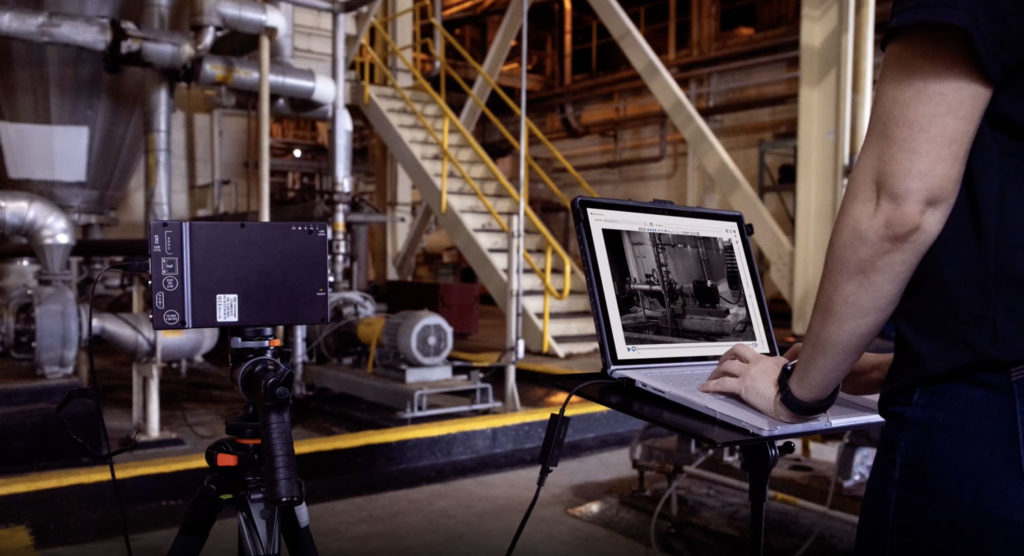
That changes what you can do in the field. You can review movement, adjust the camera position, and capture another view while the equipment is still operating under the same conditions. The upcoming piping workflow builds on that ability to see what is happening and decide where to investigate next.
What does Iris aiOne™ add for existing Iris M™ users
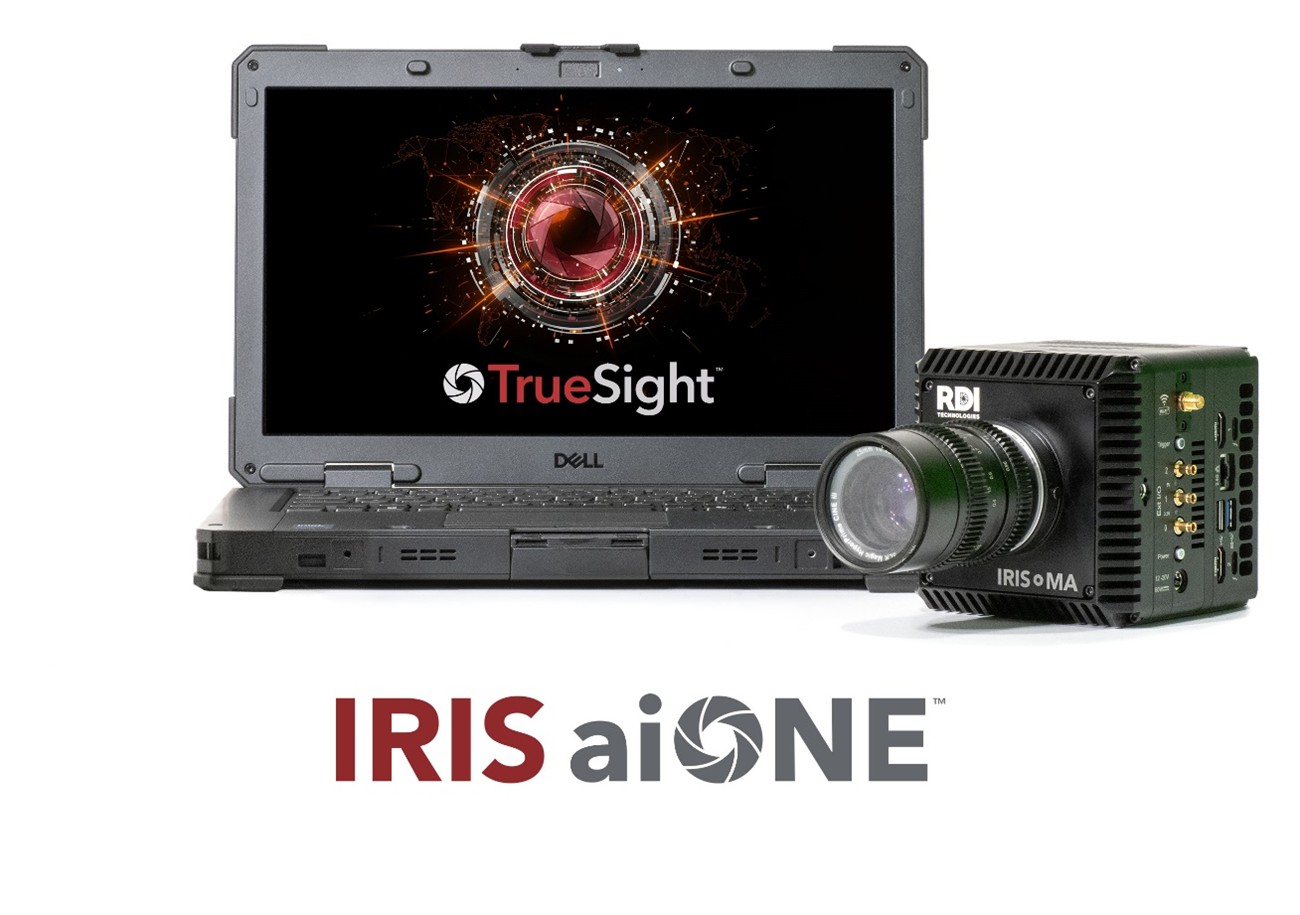
Iris aiOne brings together the Iris MA™ camera, live Motion Amplification®, on-camera processing, updated acquisition computers, and the TrueSight™ analysis platform. It gives Iris M™ owners a path to additional capture and analysis capabilities within a familiar video-based diagnostic workflow.
The hardware also supports more practical field setup. Available f/0.95 lenses collect more light through the lens and may reduce the need for supplemental lighting compared with older systems. Lighting and capture conditions still matter, especially around difficult-to-access equipment.
What does version 5.2 add for piping vibration analysis
Motion Amplification® 5.2 adds a dedicated piping acquisition mode and piping alarm visualization to Iris aiOne™. Based on Energy Institute guidance, the workflow organizes capture around the piping application and displays measured response against guidance-based thresholds.
A pipe run moves with its supports, branches, and connected equipment. Seeing that response together helps a team choose where to measure and discuss the concern using the same visual evidence. Piping alarm visualization adds the plotted response and maximum-amplitude location to help identify areas that deserve closer review.
Alarm indications support investigation. Decisions about a pipe’s condition or continued operation still require the full measurement context, corroborating evidence, and qualified engineering assessment.
How does version 5.2 improve distance calibration
Version 5.2 adds Linear Depth Calculation, which uses two distance references to define a linear depth surface across an object. The software uses the calculated local distance between those references to calibrate motion at each location. This is useful when a pipe run extends away from the camera rather than staying at one distance.
Off-Center Measurement Correction accounts for an object’s position in the image, giving analysts more flexibility when choosing a useful camera position. Appropriate distance references and capture conditions remain essential.
Users can also select, name, and edit distance markers. Those references stay with recordings through supported editing steps and Motion Explorer operations, helping the next reviewer understand the calibration setup without repeating the preparation.
Which version 5.2 improvements apply to Iris M™
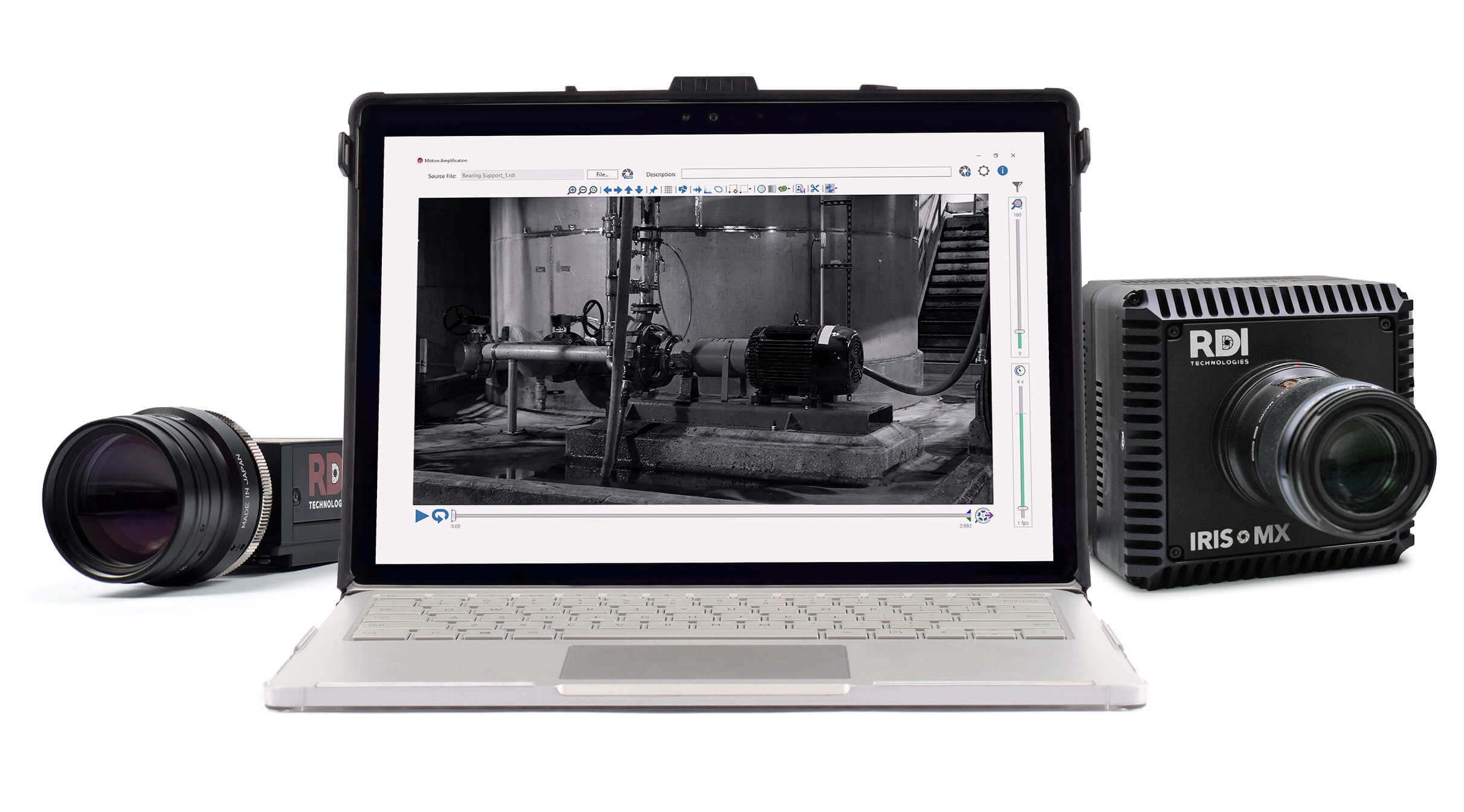
Both Iris M™ and Iris aiOne™ receive distance-calibration improvements, editable distance markers, and software performance and analysis enhancements. The dedicated piping acquisition and piping alarm visualization tools are specific to Iris aiOne™.
In RDI internal testing, version 5.2 was 50% faster than version 5.1. Actual results vary by recording size, hardware, and workflow. Improved memory handling also reduces memory pressure and releases working memory more promptly after processing.
Other improvements include faster Motion Maps, clearer object selection, and separate display controls for distances, objects, and annotations. Modal Windowing Optimization helps focus impact analysis on the useful waveform span. Regions of interest can remain visible in exported GIFs and reports, so colleagues can see where a measurement was taken.
How does TrueSight™ support equipment diagnostics
TrueSight™ adds asset identification, measurement comparison, and additional analysis options to the Iris aiOne™ platform. Customers can select modules to fit their applications and discuss the appropriate configuration with RDI.
TrueSight™ ID automatically identifies pumps, motors, and other supported components to reduce manual setup and help create consistent measurement points. TrueSight™ Limit compares vibration measurements with standards or custom thresholds, helping analysts identify results that need closer review.
TrueSight™ Accel integrates accelerometer data with the camera’s visual context when an application calls for additional sensor measurements. Other modules include Modal, Rotate, and HighSpeed. These capabilities extend the platform beyond the dedicated 5.2 piping workflow.
When should an Iris M™ owner consider trading in
An Iris M™ owner should consider Iris aiOne™ when the team needs live visualization, on-camera processing, the dedicated 5.2 piping workflow, or TrueSight™ capabilities that fit its applications. RDI’s trade-in program lets existing owners apply the value of their current system toward an upgrade.
Our longtime customers have already shown how useful visual evidence can be for investigating problems and communicating repairs. I encourage them to start with the equipment questions their team needs to answer next. An RDI representative can review the current system, trade-in value, and suitable hardware and software options.
Free virtual piping training from RDI Technologies
RDI is offering free virtual piping training with its training group, including a walkthrough of the Motion Amplification® 5.2 piping workflow. The training covers capture and distance setup, reviewing movement and alarm indications, and sharing findings.
Contact your RDI representative to discuss an Iris M™ trade-in, explore the upcoming piping workflow, or learn how to participate in the free virtual training.
Frequently asked questions
What is the difference between Iris M™ and Iris aiOne™
Iris aiOne combines the Iris MA™ camera, live visualization, on-camera processing, and TrueSight™ analysis capabilities. Both systems benefit from shared version 5.2 software improvements, while dedicated piping acquisition and piping alarm visualization are specific to Iris aiOne™.
Do I need Iris aiOne™ to use the new piping workflow
Yes. The dedicated piping acquisition and piping alarm visualization tools in Motion Amplification® 5.2 are for Iris aiOne™. Iris M™ users receive shared improvements such as distance calibration, editable markers, and faster software processing.
Does a piping alarm confirm that a pipe is unsafe
A piping alarm identifies measured response that warrants closer review against guidance-based thresholds. It does not by itself determine whether a pipe is safe to operate. Condition and operating decisions require measurement context, corroborating evidence, and qualified engineering assessment.
Can I trade in an existing Iris M™ system
RDI offers an Iris M™ trade-in program for customers moving to Iris aiOne™. Contact an RDI representative to review your equipment, trade-in value, and upgrade options for your applications.
When is version 5.2 expected to be available
Motion Amplification® 5.2 is expected in early November 2026. Contact your RDI representative for the latest release timing and availability.
How can I join the free virtual piping training
Contact your RDI representative for details about the free virtual piping training, including how to participate and how the workflow applies to your team’s piping investigations.
About Andrew Dougherty
Andrew Dougherty is Director of Sales at RDI Technologies. During more than eight years with the company, he has worked with customers across industries as Motion Amplification® has evolved from lengthy post-processing workflows to live visualization and analysis with Iris aiOne.