How is condition based maintenance different
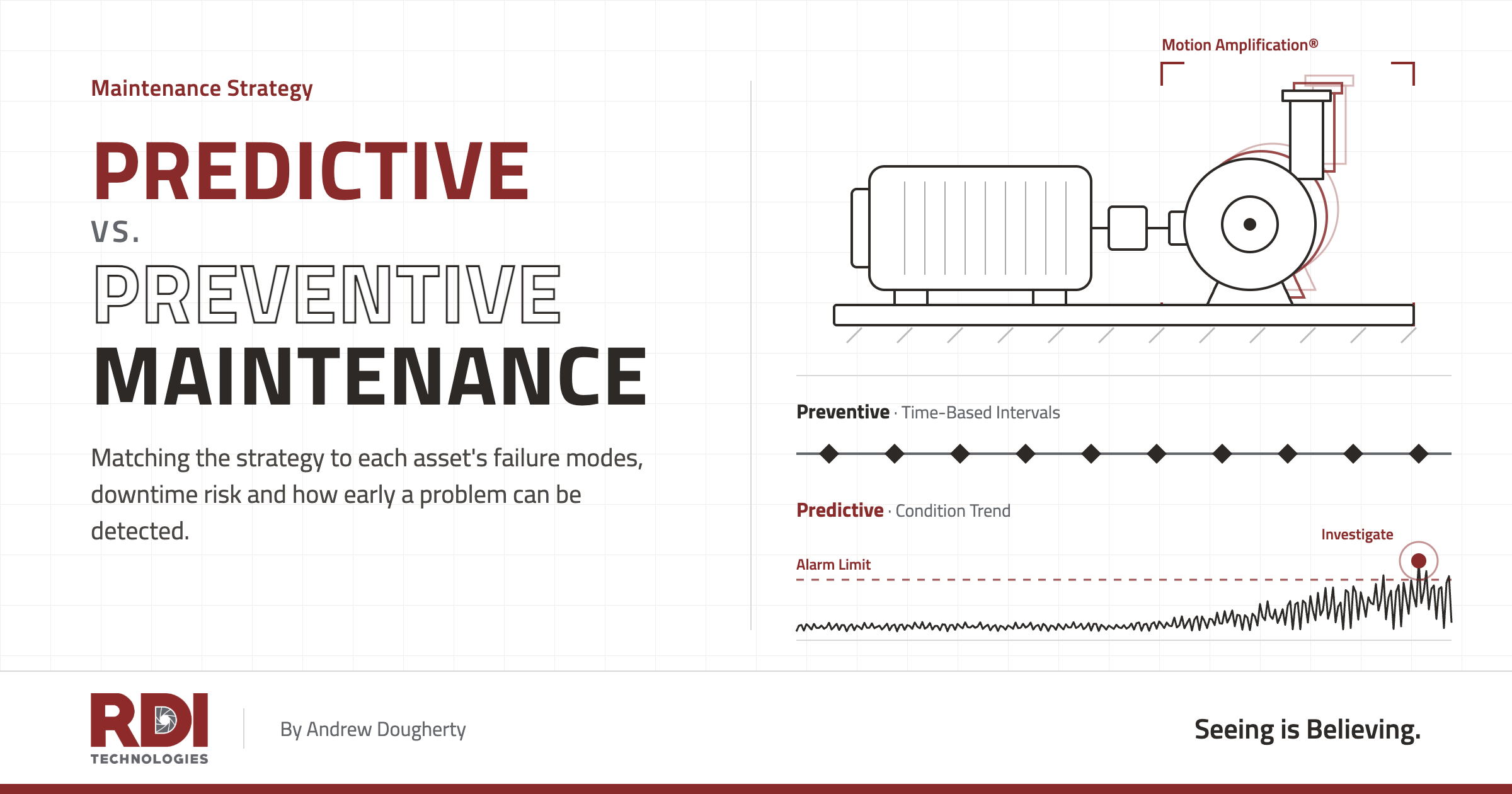
Condition-based maintenance triggers work from an asset’s measured state. Predictive maintenance uses trends or analysis to anticipate future deterioration and help determine when intervention may be needed. The terms overlap in practice, so teams should define their work triggers and decision rules explicitly.
Why does diagnosis matter after a vibration alarm
An alarm identifies a change that deserves attention. Diagnosis connects that change to a likely failure mechanism and an appropriate corrective action. Collecting more readings is useful when those readings help answer a specific equipment question.
Consider a pump with high vibration at running speed. Imbalance may be one explanation, while structural response or resonance may also contribute. Balancing alone may leave the problem unresolved if the structure is amplifying the movement. Operating conditions, spectra, phase measurements, and other tests help distinguish the causes.
Accelerometer-based vibration analysis can diagnose many faults, including bearing problems. A measurement at one location, however, may need additional measurements to explain how a machine, its base, and its supports move together. Video-based measurement adds that spatial context.
What does Motion Amplification® add to a maintenance program
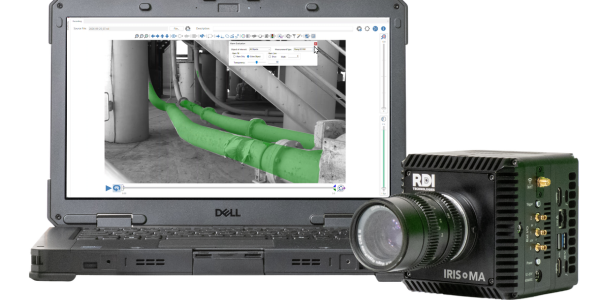
RDI Technologies’ Motion Amplification® technology uses a compatible camera and software to measure and visualize small movements across visible equipment surfaces. Reliability teams can examine how components move relative to one another and use that evidence to guide further investigation.
That view can help a team investigate base movement, structural looseness, or piping response. A video can also make the findings easier to discuss with colleagues who do not routinely interpret vibration spectra. Identifying a movement pattern supports diagnosis; it does not automatically establish the cause or the correct repair.
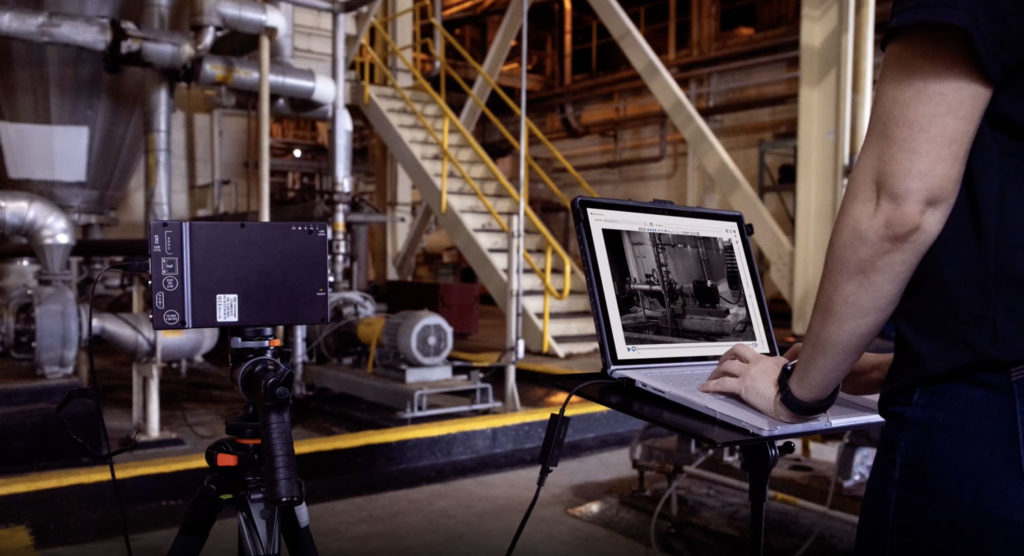
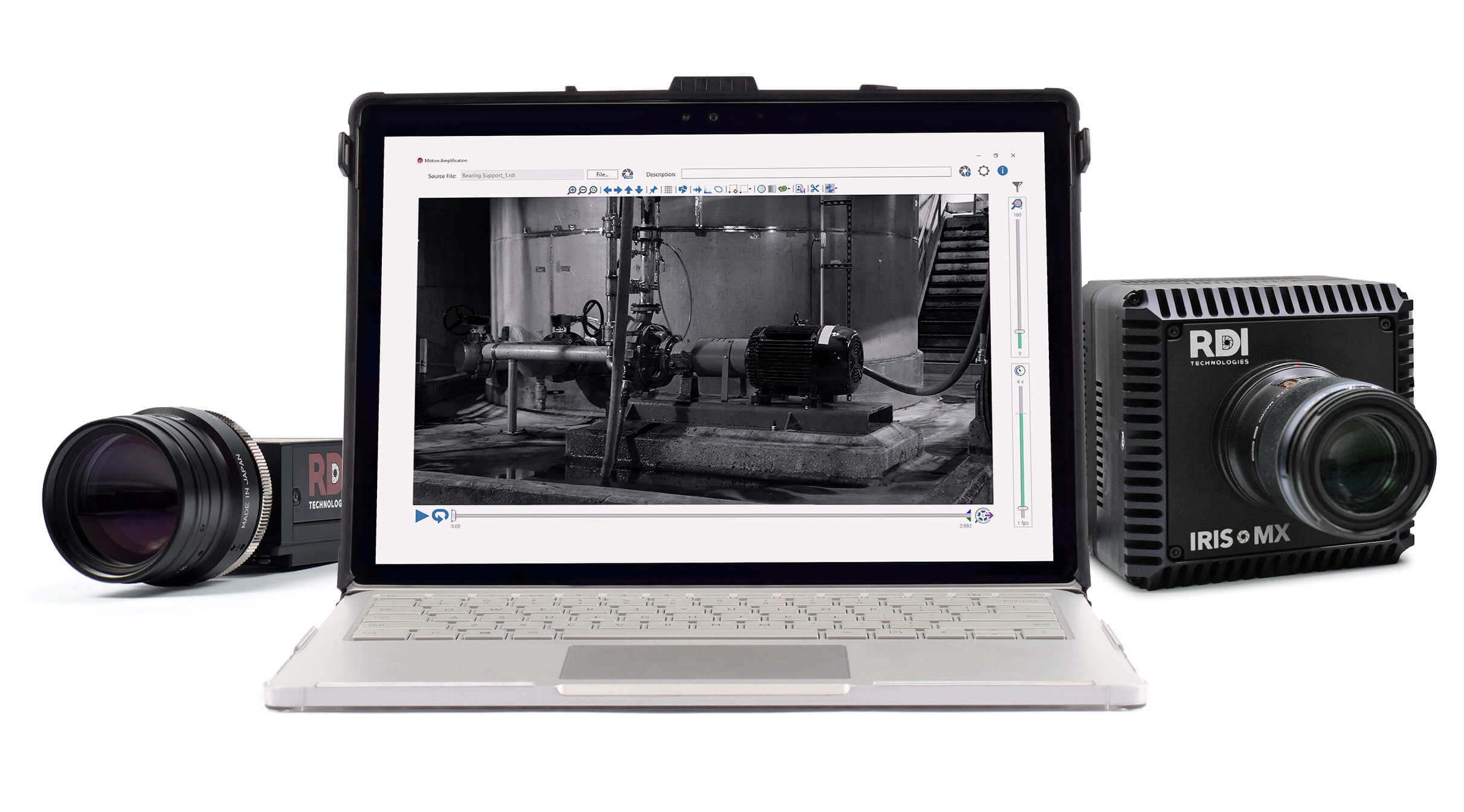
The Iris aiOne™ platform combines the Iris MA™ camera with TrueSight™ analysis capabilities. The camera supports live Motion Amplification® for immediate visual feedback. Accelerometer measurements remain useful for high-frequency and bearing-condition analysis, and can complement the video evidence.
A documented example from Buzzi Unicem USA
At Buzzi Unicem USA’s raw mill in Festus, Missouri, RDI Services used an Iris M™ system to investigate foundation concerns. Measurements showed significant base movement and total displacement reaching 57 mils across the coupling.
RDI recommended securing pedestal hold-down bolts and collecting follow-up recordings after foundation repairs. After the recommended work, reported displacement fell to 15.5 mils, a reduction of approximately 73%. This was a result from one application, rather than a guaranteed outcome for other equipment.
Read the Buzzi Unicem raw mill case study for the measurement context and corrective recommendations.
How should a plant choose its maintenance approach
Choose the approach by asset and failure mode. Scheduled work can be appropriate when wear or a service need is reasonably predictable. Condition monitoring is useful when a measurable change gives the team enough warning to investigate and intervene. Critical assets may require both.
- Start with failure consequences, including production loss and repair exposure.
- Identify the failure mechanisms and whether the proposed task or measurement can detect or prevent them.
- Set monitoring intervals and escalation rules that match how quickly a problem can develop.
- Assign responsibility for diagnosis, repair planning, and follow-up verification.
For lower-consequence items, a deliberate run-to-failure approach may sometimes be reasonable. For critical equipment, the plan should connect detection to a qualified diagnosis and a practical response. Condition data does not automatically justify canceling required service tasks.
Frequently asked questions
Is predictive maintenance better than preventive maintenance
Neither approach is best for every asset. Predictive maintenance helps when deterioration can be detected early enough to act. Preventive maintenance remains useful for known service needs and tasks based on manufacturer requirements. A plant can use both.
Does predictive maintenance require artificial intelligence
No. Predictive maintenance can use measurements and expert interpretation of condition trends. AI and statistical models can support prediction, but are not required for every predictive maintenance task.
Can vibration analysis identify the cause of a problem
Yes. Vibration analysis can diagnose many equipment faults when analysts use suitable measurements and operating context. An alarm or a single reading may require further investigation before the team can select a repair.
Does Motion Amplification® replace accelerometers
Motion Amplification® complements accelerometer-based analysis by showing movement across visible equipment surfaces. Accelerometers remain valuable for high-frequency measurements and bearing-condition analysis. The measurement method should fit the suspected failure mechanism.
Can a video predict exactly when equipment will fail
A video alone does not establish the remaining life of an asset. Motion Amplification® supports measurement and diagnosis; failure forecasts require appropriate condition history, analysis, and application-specific evidence.
Discuss your equipment investigation with RDI
If your team needs to understand how a machine, base, or pipe run is moving, contact RDI Technologies to discuss the application and suitable measurements.
About the author: Andrew Dougherty is Director of Sales at RDI Technologies, where he helps reliability and maintenance teams match measurement tools to their equipment investigations.