Passing a vibration test doesn’t mean your product is ready for the real world. See how better visibility leads to smarter, more reliable designs.
When a company like Google reassesses its methods for shock and vibration testing, it points to a larger concern: traditional validation techniques may not reflect real-world conditions.
A recent feature in Packaging World highlighted how Google’s hardware testing team questioned the standard lab-based approaches after comparing them to actual in-transit data. Their findings emphasize a growing reality across industries: passing a test does not necessarily mean a product is protected. For organizations overseeing product integrity throughout the supply chain, this is an essential distinction.
The Gap Between Lab Testing and Reality
Standard testing protocols, like ASTM and ISTA, have long served as the foundation for package validation. These frameworks provide consistency and comparisons, but they are ultimately based on generalized assumptions.
Google’s team challenged those assumptions by collecting over 100 hours of vibration data from instrumented shipments throughout their U.S. supply chain. They discovered a significant difference between real-world conditions and lab simulations.
Actual vibration environments are:
- Non-stationary and constantly changing
- Influenced by road conditions, vehicle dynamics, and load positioning
- Highly variable across different routes and times
In contrast, lab simulations often rely on condensed Power Spectral Density (PSD) profiles that remove time-history details. This leads to a simplified input that may not accurately replicate real transport conditions.
This raises a fundamental question: If real shipments face days or weeks of complex dynamic loading, how effective can a short-lasting lab test based on averaged assumptions be?
A Necessary Shift in Testing Strategy
What Google showed is not just a refinement in testing; it’s a change in mindset. Instead of asking: “Did the product pass the test?” Leading organizations are asking: “Does the test represent the real environment?” This shift has measurable effects: Products that pass lab validation can still fail in transit because the test did not reflect actual conditions. Packaging is often overdesigned, increasing costs and material use without improving real-world performance. Root cause analysis becomes challenging without insight into actual dynamic behavior.
The goal is no longer just compliance; it’s aligning with real operating conditions. Bringing Visibility into Dynamic Behavior with Motion Amplification®. This is where RDI Technologies offers a clear advantage.
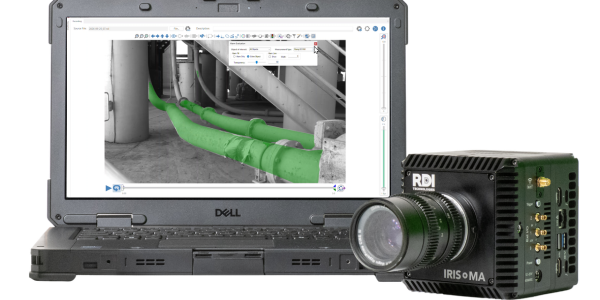
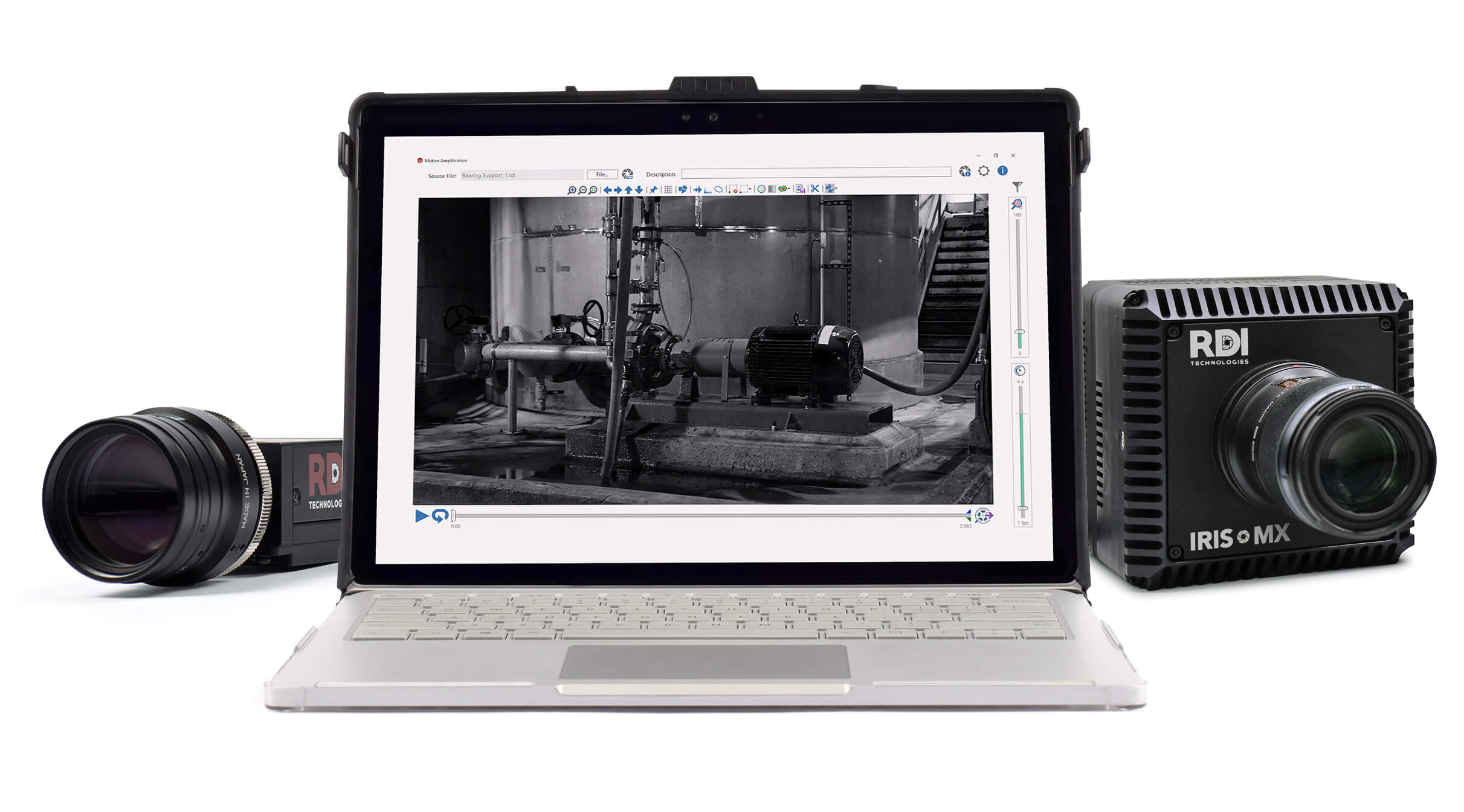
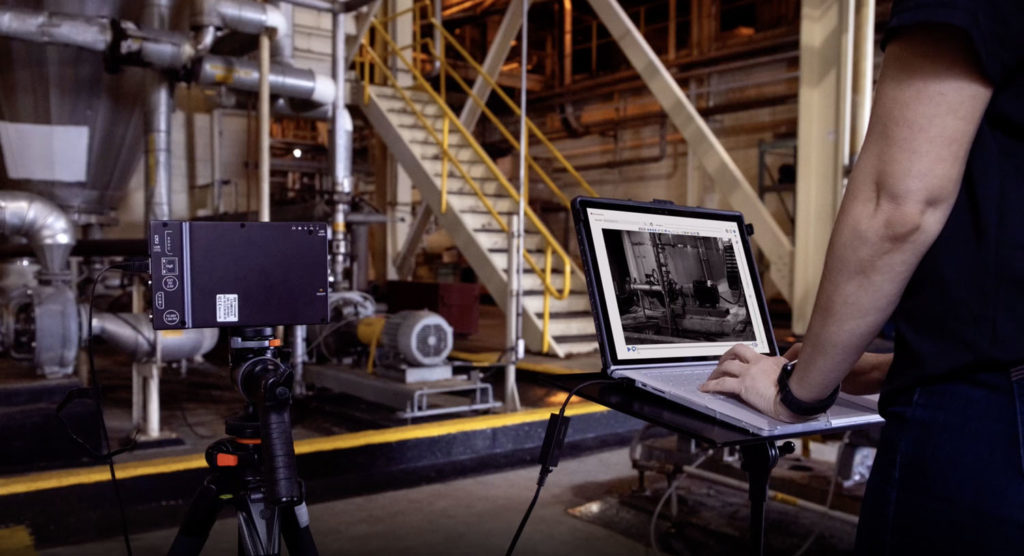
Motion Amplification® transforms how engineers analyze vibration and movement by providing full-field, non-contact measurement through video. Rather than relying on a limited number of discrete sensors, every pixel becomes a data point, giving a complete view of how structures, packages, and components respond under dynamic loading.
When applied to packaging validation and product testing, this allows teams to:
- Visualize What Traditional Sensors Miss
- Motion Amplification reveals subtle, complex motions. Engineers can directly observe deformation, resonance, and structural response, removing uncertainty in interpreting accelerometer data.
- Accelerate Design Iteration
- By identifying failure modes, looseness, and resonant behavior early on, teams can improve packaging designs before products enter the supply chain.
- Enhance Engineering and Decision-Making
- One challenge in testing is turning data into action. Video-based insights bridge that gap, making findings immediately understandable across engineering, design, and operations teams.
As noted in the original Packaging World article:
“Before, mechanical engineers may never act on accelerometer data alone. Now, they can see the issue and immediately understand what needs to change.”
Practical Takeaways for Reliability and Packaging Teams: You don’t need Google’s scale to apply these principles. This approach is relevant across various industries, from consumer electronics to industrial equipment.
Key actions include:
- Understand your actual environment: Standard profiles are a starting point, not a replacement for real-world data.
- Move beyond pass/fail metrics: Validation should reflect true operating conditions, not just the completion of tests.
- Prioritize full-field visibility: Limited sensor data can overlook critical behavior. Seeing the full system response alters decision-making.
- Improve communication across teams: Clear, visual data ensures insights lead to design improvements without delay.
The Bottom Line
“Industry standard” does not always equate to “representative of reality.” Google’s approach highlights a wider shift toward data-driven validation, where understanding the environment is just as crucial as conducting the test. At RDI Technologies, we support that shift by making vibration visible, measurable, and actionable, helping teams validate designs with confidence and reduce risk throughout the entire lifecycle.
Curious how Motion Amplification® can improve your package testing or product validation program? Get in Touch. See It In Action Today.
Source: Insights in this article are based on reporting from Packaging World: “How Google Uses AI Vision to Rethink Package Testing for Shock & Vibration.”