Introduction to Motion Amplification®
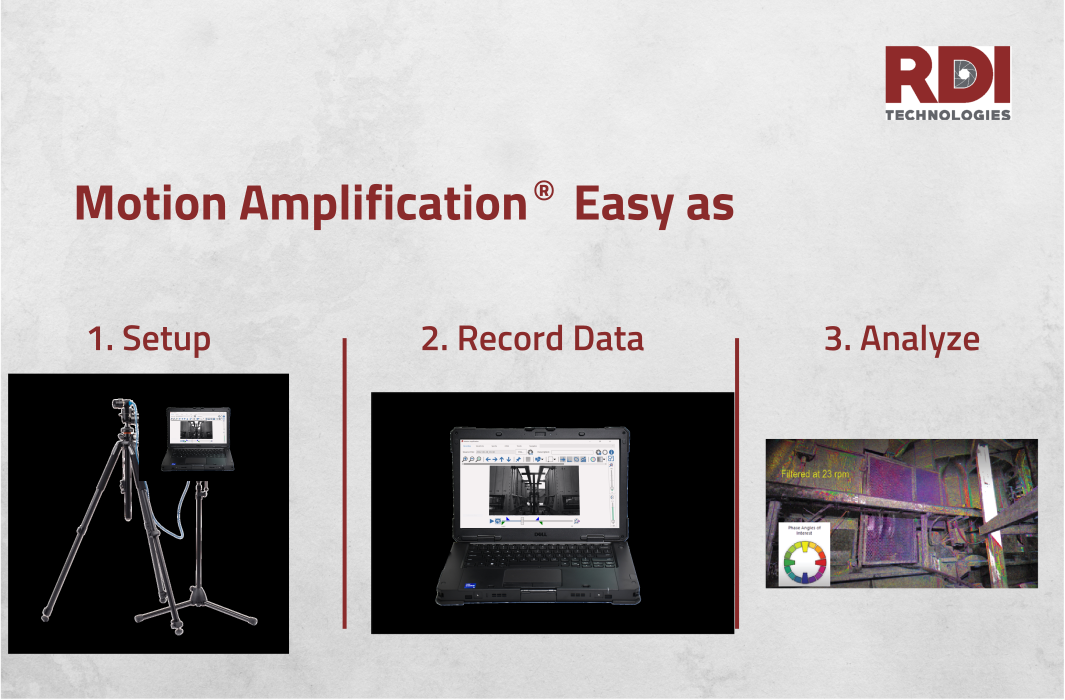
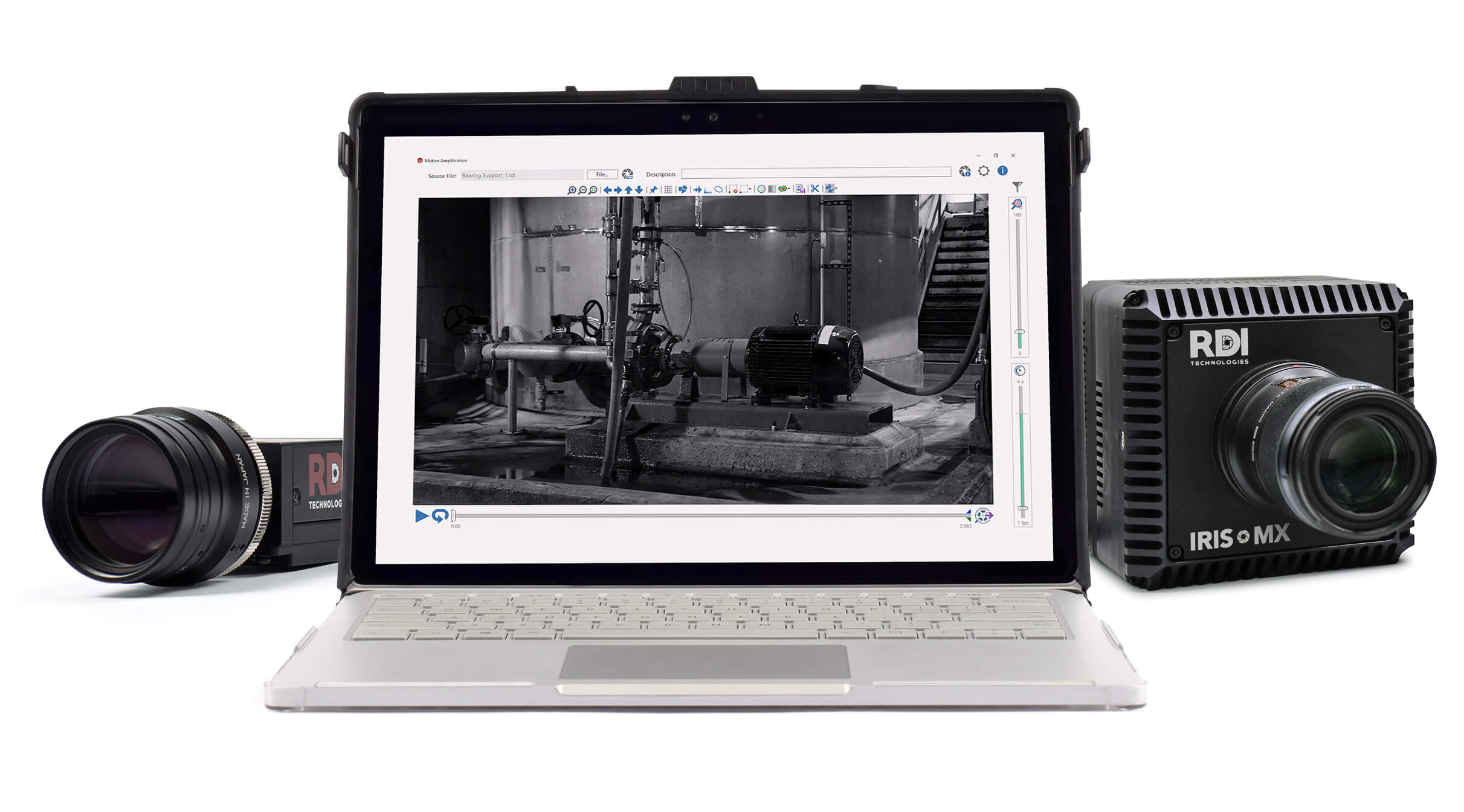
Motion Amplification® is as easy as 123, giving users an easy setup to visualize and communicate their problems using non-contact measurement. The software allows a user to visualize microscopic amounts of movement that would ordinarily be invisible to the naked eye. It uses a specially selected machine-grade/high-speed camera and patented processing algorithms to create quantitative displacement data that can be analyzed and visualized. Motion Amplification software effectively converts each pixel in the video image into a sensor that measures motion and vibration. Virtual sensors collect millions of data points quickly and provide a significant amount of information for use as a screening mechanism or for detailed analysis.
There are many benefits in using Motion Amplification, including Non-contact and Non-Destructive measurements, no painting, gluing, or surface modification required, Full-field data vs. single-point measurements, 100% coverage of the entire asset and test rig, and quantitative, actionable, and historical data.
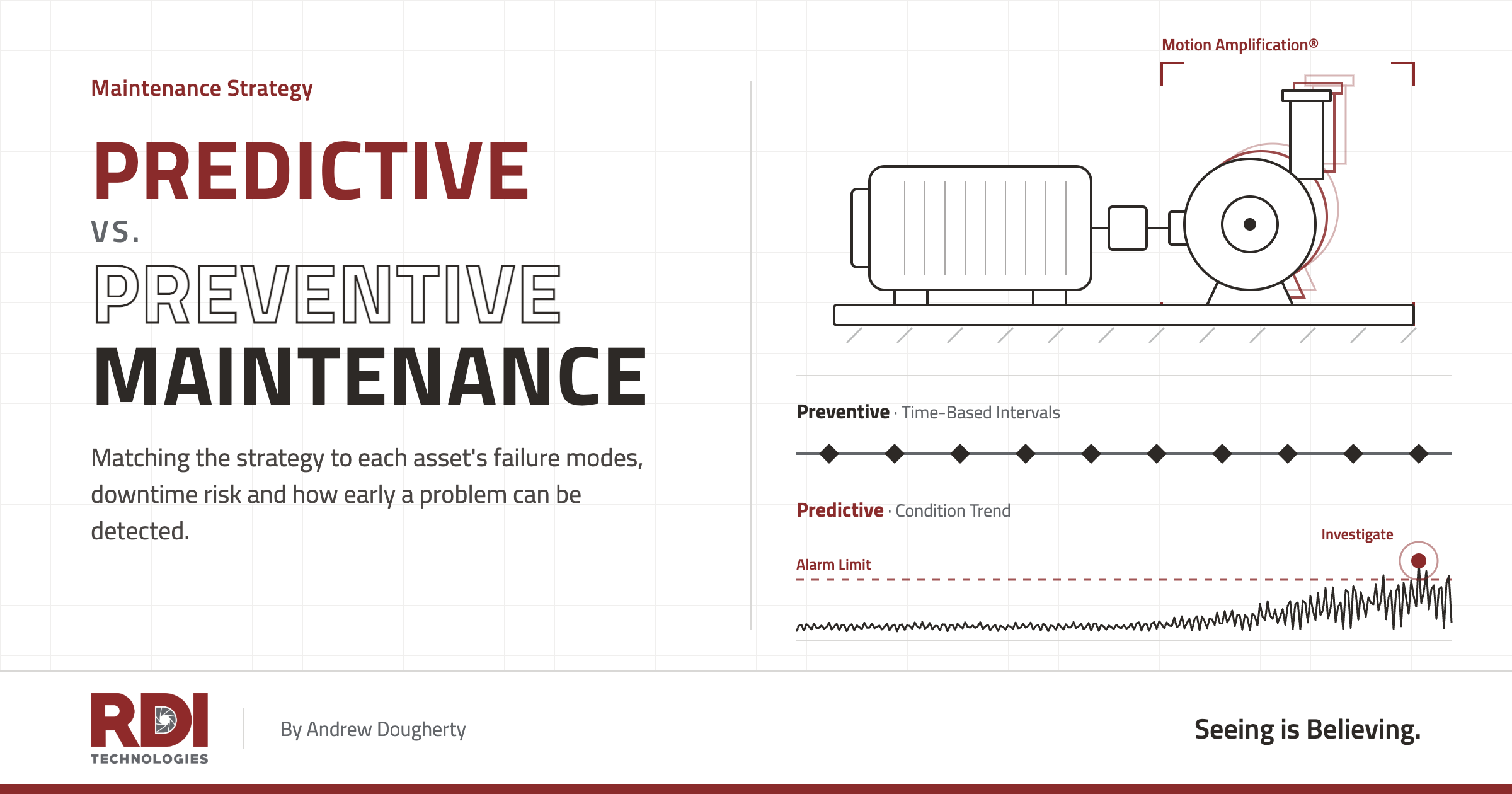
Motion Amplification is intended to work hand-in-hand with traditional vibration analysis but offers significant advantages in the following areas:
-
Visualization.
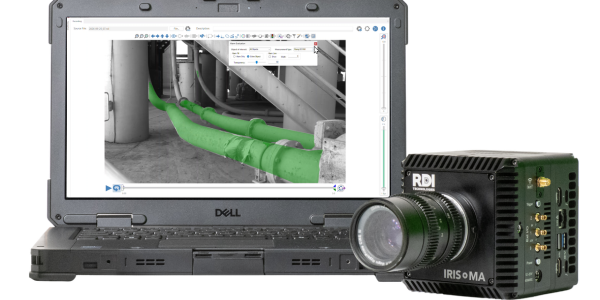
The Iris M™ system enables a dramatic visualization of motion, enhancing the understanding of how machine components interact. Traditional, accelerometer-based techniques can achieve that visualization, but it is 10 to 100 times faster to get the results with Motion Amplification.
-
Communication.
The Iris M provides unsurpassed communication between technical and non-technical resources. No more trying to explain graphs and vibration data. You can see and show how the machine, structure, and base move. This video data is accessible to everyone, not just analysts.
-
Non-Contact Measurement.
Results include not only amplified video but also the ability to make measurements of both amplitude and frequency of motion for everything that is in the field of view with zero contact. There is no limitation concerning materials either — the system can measure and amplify all materials, including metals, plastics, concrete, wood, etc. You can extract calibrated waveforms and spectrums from anywhere in the field of view.
-
Retain Phase Information.
Since every pixel is measured simultaneously, phase information between all points in the field of view is maintained. Millions of individual displacement probes (the camera sensor’s pixels) show how all points in the field of view are moving relative to one another.
-
No Low-Frequency Limitations.
Unlike accelerometers, Iris M measures displacement directly, so there is no low-frequency limitation — motion amplification can go to zero (frequency). This ability makes it the perfect complement to accelerometer-based readings.
-
Enhances Traditional Vibration Analysis
Motion Amplification works with traditional Vibration Analysis; it is not a replacement. Accelerometers are ideally suited to finding problems at higher frequencies, largely because they natively measure acceleration, and there tends to be a lot of acceleration at high frequencies. In contrast, there tends to be almost no acceleration at very low frequencies but plenty of displacement, which is why Motion Amplification excels at low frequencies.
Test and Measurement Applications
Motion Amplification has many applications in R&D, consumer products manufacturing, university research, industrial manufacturing and production, amusement parks, aerospace, transportation, and construction. A variety of tests and measurements are used in those applications. Motion Amplification can bring data quickly to each team for concept validations, product certifications, product qualifications, and quality inspections. Aerospace, automotive, electronics, and medical device manufacturers all perform extensive development testing; Motion Amplification can speed up the product development phase before mass production.
Various testing phases are performed at different intervals during the designing and engineering life cycle. That includes concept design, engineering, prototyping, certification, and final product acceptance. Tests and measurements are also crucial during installation and when commissioning products, mechanical systems, and structures. Every testing cycle is important to both producers and end-users to improve product quality, speed the product development cycle, mitigate risks, and ensure product reliability and safety.
Consider Motion Amplification for Dynamics, Displacement, Impact, Materials Fatigue, Mechanical Testing, Non-Destructive (NDT), Vibration, Test Stands, Shaker tables, Stress, and Structural testing applications.
Example: Motion Amplification in Consumer Product Testing Facility
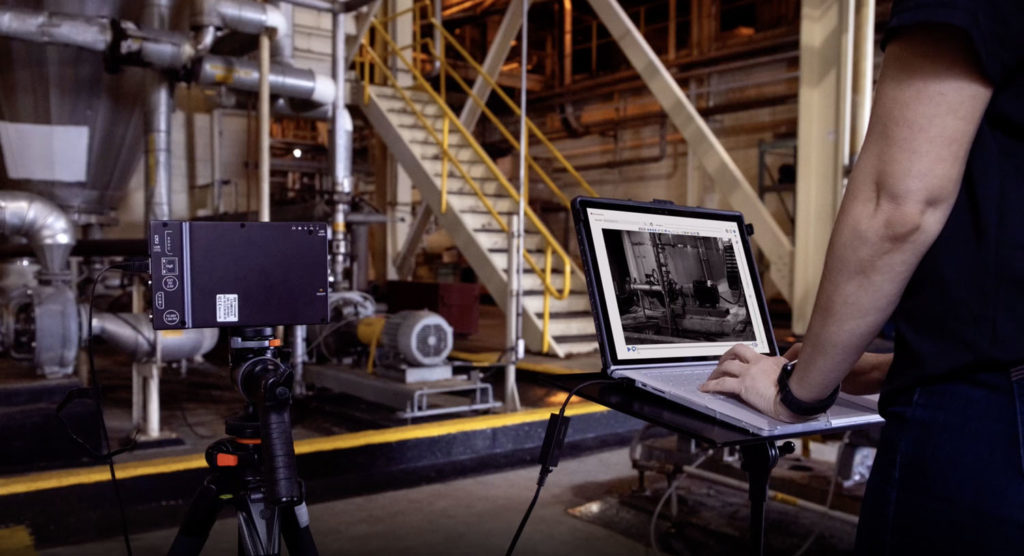
A Test and Measurement professional working in a test facility may need to perform Vibration tests on a prototype product running in a test cell. The test rig setup could be time-consuming and costly depending on the number of sensors and strain gauges required. As a suite of non-contact instruments, RDI’s Iris Platform powered by Motion Amplification offers a quick setup (less than 5 minutes). It acquires millions of simultaneous vibration measurements by turning the camera’s pixels into millions of non-contact displacement sensors.
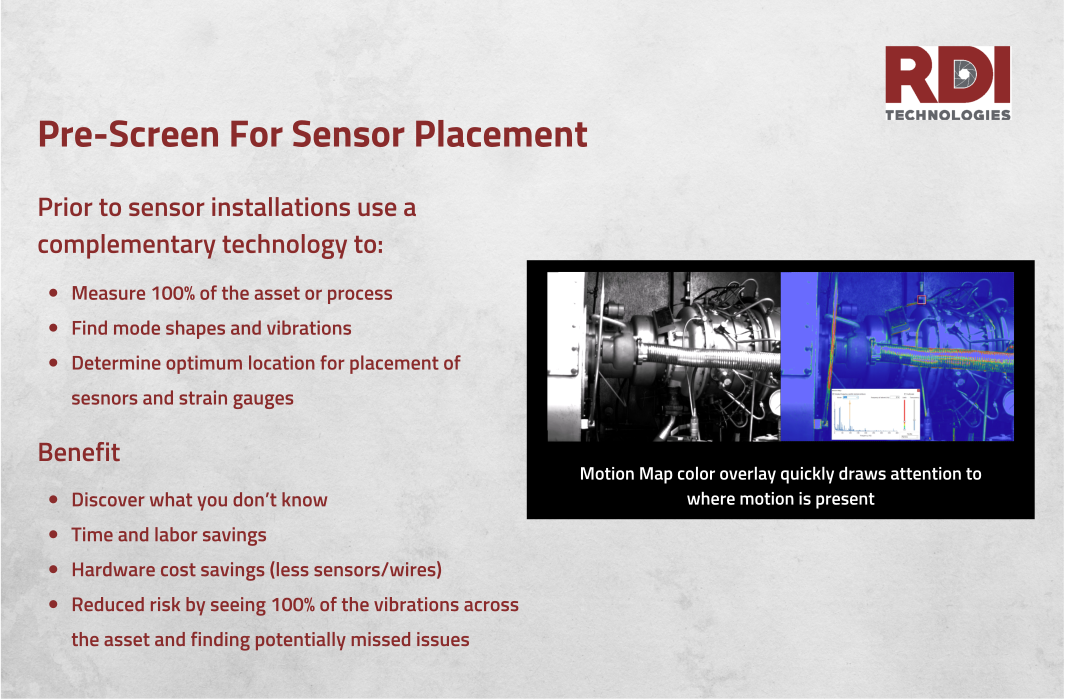
Before the sensor and strain gauge installations, Motion Amplification could be used as a complementary technology to help understand what is moving where and determine optimum placements of strain gauges and sensors. With 100% coverage of assets with back-to-back pixels, the user can see all mode shapes present and ensure they are as efficient as possible by only using the required number of physical sensors. Limiting physical sensors will save time and reduce costs by knowing the node locations and eliminating some strain gauges and sensor placements.
The user will see the most benefit from Motion Amplification when able to visualize movements that are not visible to the human eye. Visualized data enhances communication when reviewing and sharing test results with technical and non-technical personnel.
“We’ve found one of the most useful features of the Motion Amplification Camera is that it can visualize the motion of a machine, simplifying the explanation of a typical vibration problem.” – Matthew Breuhl, AEDC CBM Vibration Lead
Motion Amplification Easy as 123
RDI Motion Amplification software produces easy-to-understand videos of the actual movement across the equipment or structure, which enables far more effective communication between technical and non-technical personnel, enhancing decision-making. Within seconds of data collection, the RDI platforms can produce videos.
Using machine-grade high-speed cameras and Motion Amplification, the software enables users to visualize the motion of the overall asset, individual components, structures, and bases at once to determine the root cause and better understand the interrelationships of all elements in the scene. Depending on the RDI camera selection, the user can measure frequency ranges from 5400 CPM (90 Hz) to 870,00 CPM (14.5K Hz) with minimum displacements from <0.01 mils (0.25 μm) to 0.005 mils (0.125 μm).
Do you have some applications that you’re considering for Motion Amplification? We would like to hear from you so we can help you Detect, Visualize, and Solve your complex problems!
Contact Us
By: Frank Vitucci